
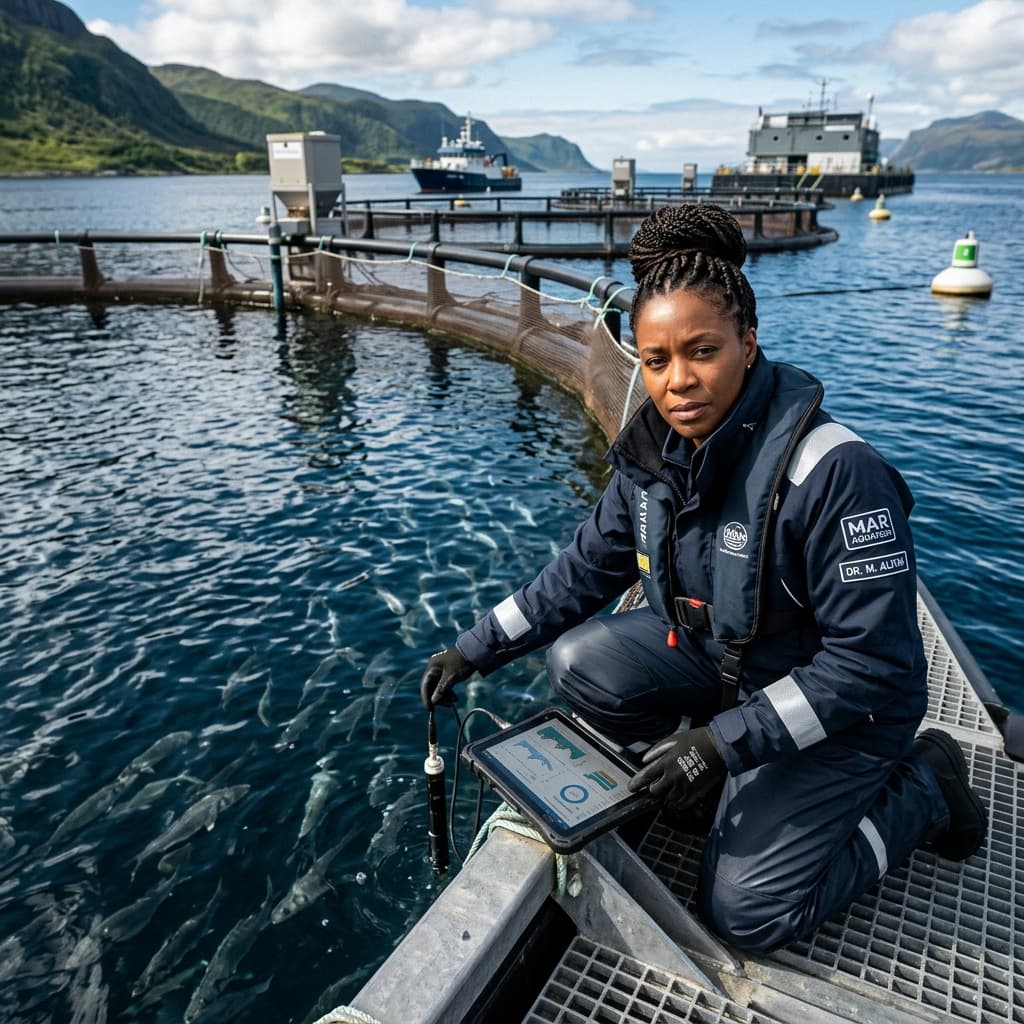
A vision model, not a camera network.
Cloud-hosted computer vision that screens ordinary inspection photos — built to run on what you already carry, not on hardware we'd have to ship you.
Photos in, structured findings out
AquaHealth doesn't require underwater cameras, edge boxes, or sensor arrays. Your team uploads a still photo — taken with a phone or an existing facility camera — and our models run in the cloud against it. That's the entire hardware requirement: a camera you already own.
We use object detection and classification techniques trained on labeled aquaculture inspection imagery to flag visual indicators — lesions, fin damage, parasite clustering, and abnormal surface behavior — and return a bounding region with a confidence score, not just a yes/no verdict.
The cloud stack behind it
None of this lives on your site — it's the cloud infrastructure our software runs on, not equipment we ship you.
NVIDIA GPUs, cloud-hosted
Model training and inference run on NVIDIA GPU instances in the cloud — this powers how the model learns and scores photos, not a device installed at your facility.
Microsoft Azure Cosmos DB
Findings, confidence scores, and review status are stored in Cosmos DB, giving your team low-latency access to results as soon as a photo is screened.
AWS S3
Uploaded photos are stored and backed up in S3, so your inspection history stays available and durable independent of any single facility's own systems.
Where the model stands today
We'd rather tell you the current limits than oversell them. This is an early-stage model that improves as pilot operators confirm and correct its flags.
Trained on labeled inspection photos
Coverage focuses on visual indicators we can validate against real examples, and it grows condition by condition rather than all at once.
Confidence scored, not binary
Every finding carries a confidence percentage so your team can judge how much weight to give it, instead of treating every flag the same.
Human review by default
Nothing dispatches treatment or automated action on its own. Findings go to a review queue for your team to confirm or dismiss.
Your photos, your data
Photos and findings are stored for your account only. With your consent, confirmed and corrected flags help improve detection for your site over time.